Where can a chaise lounge go without getting in the way?
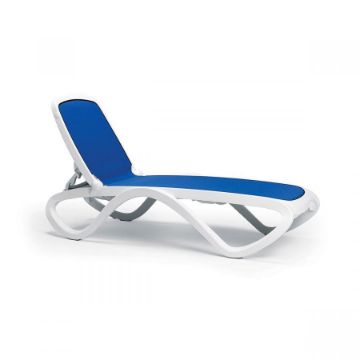
A chaise lounge belongs where it can be reached easily, reclined fully, and left in place without narrowing the main walking route. The best spot is usually along a wall, fence, railing, pool edge, or the quiet side of a terrace, with the long side of the lounger parallel to the route people use most. Leave a clear path in front of the seat and around the foot end so the chair can open, close, and be used without anyone stepping around it.
Good placement is less about finding an empty corner and more about understanding how the outdoor space actually works. A terrace or patio often has several jobs at once: dining, lounging, moving between doors and steps, reaching a grill, tending plants, or getting to the pool. A lounger that looks fine on a plan may still interrupt daily movement once cushions, side tables, and feet are in use.
Start with the routes people use
Before choosing a position, trace the natural lines of movement through the space. Notice the route from a door to a step, from dining seats to the house, from the pool to a towel area, and along any narrow passage beside a planter or wall. These routes should stay open. A chaise is a long, low object, so even a small intrusion at the foot end can make a route feel cramped.
Place the lounger where the body of the chair sits outside those lines. Along a boundary is often easiest, because one side of the chair already has no traffic. On a small terrace, the long side can run parallel to the railing, leaving the centre of the floor area free. If the terrace is narrow, placing a chaise at an angle may create a useful pocket of seating, but only if the diagonal does not cut across the most used path.
Also think about how the reclining position changes the chair footprint. A chaise takes up more room when the back is lowered and the leg section is extended. If it sits close to a dining table, door swing, or planter, the moving parts may bump into something even when the closed chair fits. Check the full length of the reclined seat, not just the base.

Give the lounger a zone of its own
Layout zones make small outdoor spaces easier to use. A dining zone needs clear space around chairs. A lounging zone needs room to sit, recline, stand up, and reach a drink or book. A route needs uninterrupted floor. When these zones overlap too much, the space feels busy even if the furniture count is modest.
A chaise works well at the edge of a lounging zone, with its long side facing open space rather than a wall. This lets the reclined back and foot section work without fighting the boundary. If two loungers sit side by side, leave enough room between them for a person to get in and out without shifting both chairs. A narrow gap may look tidy, but it quickly becomes a place where cushions catch and feet collide.
Space saving loungers can help where the floor is limited, especially when they are slim, stackable, or designed to sit close to a boundary. The term should not be taken as permission to fill every gap. A compact chaise still needs clearance space at the points where people move, open it, and sit down. Saving room comes from choosing a sensible shape and putting it in the right place, not from squeezing it into a route.
In a mixed seating area, compare the chair footprint of each piece. Dining chairs can be tucked in, benches can sit along an edge, and a chaise needs more length. That length is easier to manage when the chaise sits where the room is already long, such as beside a railing or along the side of a pool deck, rather than across the width of a terrace.
Watch the small obstacles
Many outdoor spaces contain fixed features that affect placement. Drain covers, hose points, planters, steps, low walls, pool ladders, door thresholds, and outdoor taps all shape the usable area. A chaise should not cover access to any feature that needs regular attention. It should also not sit where rainwater collects or where a door opens outward.
Resin outdoor furniture is often chosen for poolside and terrace use because it suits outdoor conditions and is easy to move compared with heavier materials. Even so, a lounger should be positioned with stability in mind. Put it on firm, level paving where the feet sit evenly. Avoid a spot where one end rests on a slope or an uneven joint, as that can make the chair feel unsteady and may strain the frame over time.
Cushions, towels, and side tables count as part of the arrangement. A chaise beside a small table is comfortable only if the table does not block the line of movement or prevent the lounger from reclining. If space is tight, a narrow side table at the head end usually works better than a square table beside the middle of the seat.
Making a small terrace feel open
Small spaces benefit from a simple arrangement. One long lounger along an edge, a compact chair or two, and a clear centre can feel more usable than several pieces competing for the same floor. Flexible furniture for small terraces works best when each item has a purpose and a resting place that does not interrupt movement. A chaise that can be moved, stacked, or tucked beside other pieces gives the layout more range.
Where the terrace is used for both dining and lounging, consider whether the chaise can sit outside the dining zone during meals. Some layouts allow it to remain along a side wall with enough clearance for diners to pass. Others need the lounger to be moved aside. If moving is part of the plan, keep the route to its parking spot clear and avoid placing heavy planters or baskets in the way.
Visual openness matters too. A low chaise does not block a view in the way an upright chair might, but a row of long loungers can still make a terrace feel partitioned. Keep open gaps where the eye can travel, especially near railing, garden beds, or a pool. This makes the area feel calmer and helps people judge where they can walk.
Poolside and terrace placement
Near a pool, the main concern is wet traffic. People step out, drip water, reach for towels, and move between seating and the water. A chaise placed directly on that line can become a obstacle and may stay damp longer than necessary. Position it to the side of the busiest route, with enough space between the lounger and the pool edge for someone to stand and dry off.
Resin chaise lounges fit naturally into poolside layouts where durability and easy care matter. Placement should still allow the back to adjust and the feet to extend without touching another chair, a planter, or a wall. Where several loungers line up, keep the spacing consistent. Even rows are easier to move around than a scattered arrangement, particularly when towels and drinks are in use.
On a balcony, the calculation is stricter. The door, railing, and available floor area set firm limits. A chaise should not stand in front of the door or block access to a window latch, drain, or storage box. If the balcony is too narrow for a reclined lounger plus a walking line, a smaller chair or a compact seat may serve better. Forcing a full length chaise into that space often makes the whole balcony harder to use.
A practical way to judge the fit
The simplest test is to picture the chair at its most used, not its smallest. Imagine someone sitting down, lowering the back, extending their legs, standing up, and walking away. Then imagine a second person passing with a tray, a towel, or a drink. If either action requires shifting the chaise or turning sideways, the placement is too tight.
Another useful check is to look at the space from the entrance to the terrace. The main route should read clearly, with the chaise sitting beside it rather than across it. Furniture can define an edge of that route, but it should not make the route feel like a maze. In smaller layouts, flexible furniture for small terraces helps keep the arrangement adaptable, especially when seating can be moved for different uses.
A chaise lounge does not need to dominate the layout to be useful. Set it beside a boundary, keep the reclined length clear, protect the main walking route, and leave room around the seat for real use. When those points are handled, the lounger becomes a comfortable part of the terrace rather than an object everyone has to work around.